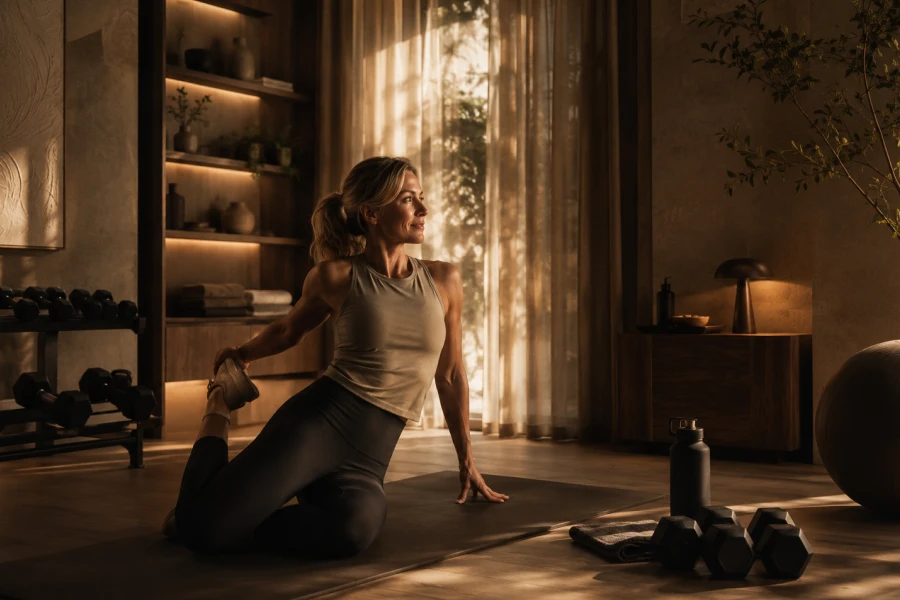
A great workout space does more than hold dumbbells and mats. Motivational home gym design helps remove the invisible barriers that keep exercise from happening. It makes movement feel easier to begin, even when energy is low. The best setup reflects your goals, personality, and daily rhythm. You may need bright light for early workouts or a quiet corner for evening mobility. You may also need storage that makes equipment feel less overwhelming. Start with the habits you want to build rather than the products you want to buy. A thoughtful environment can make even a 20-minute session feel worthwhile. Every detail should make the next workout more likely. When the room supports the habit, motivation has somewhere practical to grow.
Exercise spaces work better when they create the mood you need. Some people want bright, high-energy surroundings that feel active and focused. Others want a calmer setting that supports steady, low-pressure movement. Think about how you want to feel when you enter the room. That feeling should guide your lighting, color, sound, and layout choices. Build a movement-friendly room design that makes you want to spend time there. Avoid copying a look that does not fit your natural preferences. A room can be minimal, colorful, peaceful, or energetic. The important part is whether it supports your routine. Personal connection creates stronger long-term motivation than a trend-driven setup.
Your workout space should quietly remind you why movement matters. That does not require slogans, charts, or complicated tracking systems. Sometimes the best reminder is simply seeing your favorite equipment ready to use. A yoga mat near a window can invite a morning stretch. A pair of weights beside a bench can make a short strength session feel possible. Keep the space clear enough for its purpose to be visible. Choose one or two items that represent the routine you want to build. Let practical design carry the message. A prepared room reduces the need for constant willpower. When your goals have a physical place, they are easier to revisit daily. Good design turns intention into an everyday cue.
Distractions can make short workouts feel harder than they need to be. Keep the active zone free from unrelated clutter whenever possible. Store paperwork, laundry, and household items somewhere else before beginning a session. A clean visual field makes it easier to focus on movement. Use lighting that supports the time of day you usually train. Choose a speaker setup that is easy to operate without searching for cables. A simple daily exercise setup can include only the items you use most. Too many options can create hesitation. Clear surfaces and reliable tools encourage you to start. Focus grows when the space feels prepared for one obvious purpose.
Color has a strong effect on how a room feels during a workout. Soft neutrals can create a calm environment for mobility, yoga, or recovery. Deep blue, forest green, or charcoal can feel grounding for strength-focused spaces. Warm accents can add energy without making the room visually aggressive. Let your preferred workout style influence the palette. Textures matter as well. Wood, woven baskets, soft mats, and matte storage can make equipment feel more connected to the home. Avoid finishes that feel overly sterile unless that suits your taste. Good design balances function with comfort. The room should feel purposeful without feeling separate from the rest of your home.
Many home gyms share space with offices, bedrooms, or living areas. Flexible zones help the room work throughout the day. Use a folding screen, storage bench, or movable cart to define the workout area. A mat can roll away when you need more floor space. Keep items on wheels if you frequently change the room’s layout. Consider small-space strength training options that do not require permanent installation. Flexibility keeps your setup from competing with daily life. It also makes exercise feel more realistic in a multifunctional home. The best zone is one that can appear when you need it. Then it can disappear without creating stress afterward.
The strongest workout spaces tell a small story about the person who uses them. Add details that make you feel grounded, focused, or energized. A favorite lamp, a plant, a framed abstract print, or a neat shelf can create connection. Avoid overdecorating the room with objects that make cleaning harder. Keep only what supports your routine or makes you happy to be there. Notice what consistently improves your mood during a workout. Then make room for more of that feeling. Your gym does not need to look like anyone else’s. It needs to make movement feel like an achievable part of your life. Personal design choices can turn a practical corner into a meaningful ritual space. That is where lasting motivation begins.



Leave a comment