
A workout area at home becomes more useful when it feels connected to your real routine. It should support the way you move, the hours you keep, and the space you actually have. The best setups are not always the biggest or most expensive. They are the ones that make starting feel simple. You may have a spare room, a living room corner, or a few clear feet beside the bed. Each option can work when it is planned with care. Think about what makes you avoid exercise at home now. Your setup should solve those small barriers first. A clear, personal space can make movement feel easier to return to. The right design gives your habits a place to become more consistent.
A defined purpose helps you avoid creating a storage zone disguised as a gym. Decide what kind of movement the area will support most often. It may be strength training, yoga, stretching, low-impact cardio, or a mix of simple routines. Once the purpose is clear, equipment decisions become easier. You will know how much floor space you need and what can stay stored. Consider a personalized training environment that reflects your favorite type of movement. Keep the setup focused enough to feel approachable. One clearly defined use is better than five half-finished possibilities. The room should answer the question of what to do next. That clarity makes it easier to begin.
You do not need to wait for a perfect spare room. Look for corners that already feel easy to access during your day. An unused wall in the bedroom may work for mats and bands. A living room section can become a morning mobility zone. A garage corner can support heavier equipment if the floor allows it. Begin by measuring the clear area rather than guessing. Notice nearby outlets, natural light, and storage opportunities. Choose a location that does not require a major reset before every session. Convenience matters because it lowers the barrier to action. The right spot is usually the one you will actually use. Practical access often matters more than perfect aesthetics.
Versatile equipment helps a small setup stay flexible and useful. A mat, resistance bands, adjustable weights, and a stable bench can support many routines. You may also benefit from a foam roller, sliders, or a small step platform. Avoid filling the area with items that offer only one limited use. Think about what you reach for in most workouts. Choose tools that support those movements first. Keep equipment visible enough to access easily but contained enough to prevent clutter. A few quality pieces can create more value than a crowded collection. Your setup should make options feel clear rather than overwhelming. Simple essentials often support the strongest habits over time.
The easier your space is to reset, the more consistently you will use it. Store smaller equipment in baskets, drawers, or a low cabinet. Hang bands and mats where they can be reached quickly. Return everything after a session so the area feels ready again tomorrow. This short cleanup ritual can become part of the workout itself. Use workout storage solutions that fit the room instead of adding bulky furniture. Choose containers that are easy to open and easy to clean. Keep a towel and water bottle nearby if that helps you begin faster. A resettable space reduces visual stress. It also makes exercise feel more compatible with everyday home life.
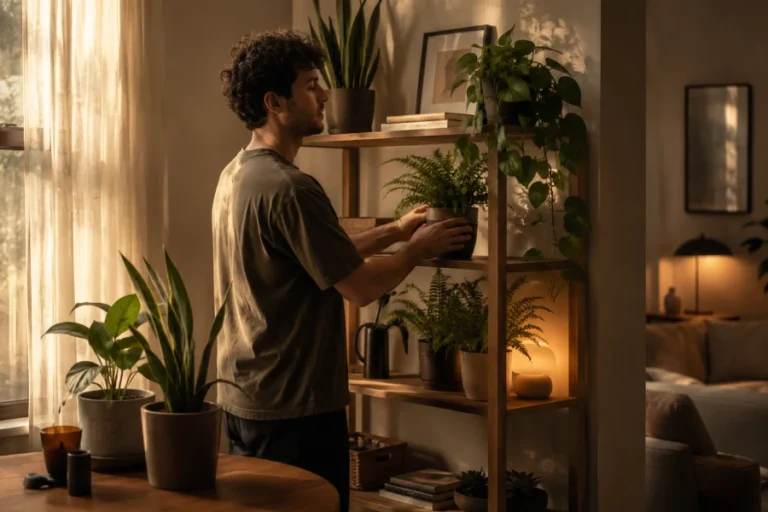
A welcoming environment can change how you feel before the workout begins. Light, sound, temperature, and visual order all influence your willingness to move. Open a window, add a fan, or use a lamp that makes evening sessions feel comfortable. Keep distractions out of the active zone whenever possible. A clean floor and visible mat can provide a powerful starting cue. Choose music that matches the energy you want to create. Add one or two details that make the area feel personal. A plant, framed abstract image, or soft rug nearby can warm up the space. Your workout environment should feel supportive, not demanding. Comfort can make consistency far easier to maintain.
Your needs will change as your fitness habits become more established. A setup that works for mobility today may need more strength equipment later. A shared living room corner may eventually become a dedicated zone. Let the space evolve based on what you actually use. Review your equipment every few months and remove items that no longer support your routine. Add new tools only when they solve a clear problem. Keep enough open space for the movements that matter most. The room does not need to be finished to be valuable. Small improvements can create meaningful progress over time. Your workout area should grow with your lifestyle rather than becoming another source of pressure. That flexibility is what makes a home setup truly sustainable.



Leave a comment