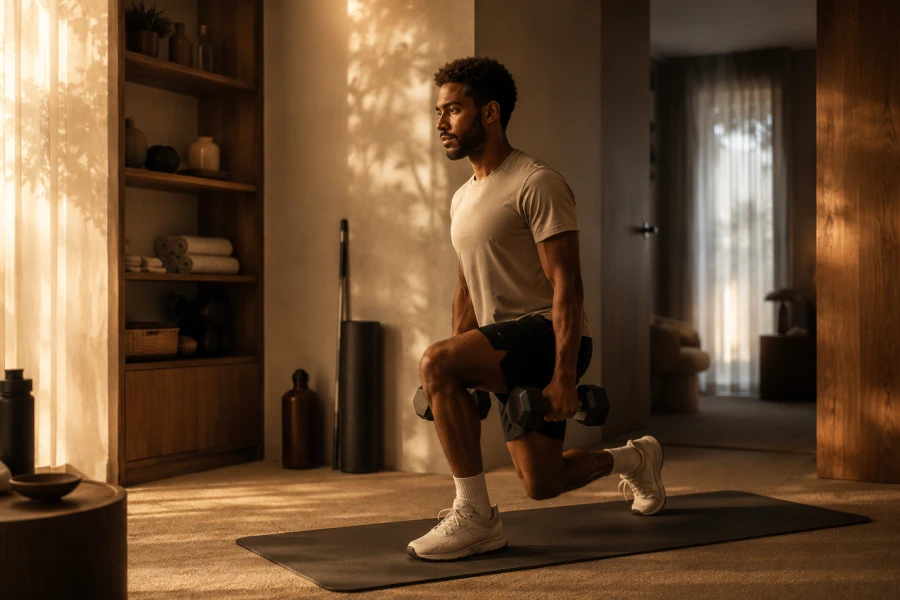
Limited square footage does not need to limit your ability to exercise regularly. A small home workout space can support meaningful movement when every detail serves a purpose. The secret is not squeezing in more equipment than you need. It is creating an area that feels simple to enter and easy to reset. You may only have part of a bedroom, living room corner, or clear hallway. That can still become a reliable training zone. Start by identifying the movements you enjoy most and the equipment they require. Then protect enough open floor space to use those items safely. A focused setup can feel more motivating than an oversized room with no clear function. Thoughtful choices turn even the smallest area into a place where progress feels possible.
A smaller setup naturally encourages better editing and clearer priorities. You are more likely to keep equipment that supports your actual routine. This can make every item easier to reach and easier to maintain. A defined zone also creates a useful mental boundary between work, rest, and exercise. Begin with a training zone at home that can be prepared in minutes. A mat, bands, adjustable weights, and one storage solution may be enough. Let the space reflect how you want to feel during a workout. Clear, calm, and ready usually beats crowded and impressive. Your environment should make movement feel accessible. Smaller spaces often succeed because they remove unnecessary choices.
Every item in a compact workout area needs to justify the space it uses. Choose versatile pieces that support more than one exercise. Resistance bands can work for strength, mobility, warmups, and rehabilitation-style movement. Adjustable weights reduce the need for several separate sets. A yoga mat can support stretching, floor strength, and core work. Look for flexible fitness space solutions that are easy to store between sessions. Foldable benches and stackable blocks can add function without permanent bulk. Avoid buying equipment just because it appears in every home gym photo. Your best setup is built around what you will truly use. Simple tools often support the most consistent routines.
Layout determines whether a small space feels practical or frustrating. Keep the longest clear section of floor available for movement. Store weights and accessories along one wall instead of scattering them around the room. Place a mirror only where it supports form checking without making the room feel busy. Use furniture that can move easily if the area serves more than one purpose. A narrow bench or rolling cart can create flexibility. Keep cables, bands, and smaller tools contained in one spot. Open space is an important piece of equipment in its own right. The easier it is to move freely, the more likely you are to use the area. Good layout makes a modest room feel larger than it is.
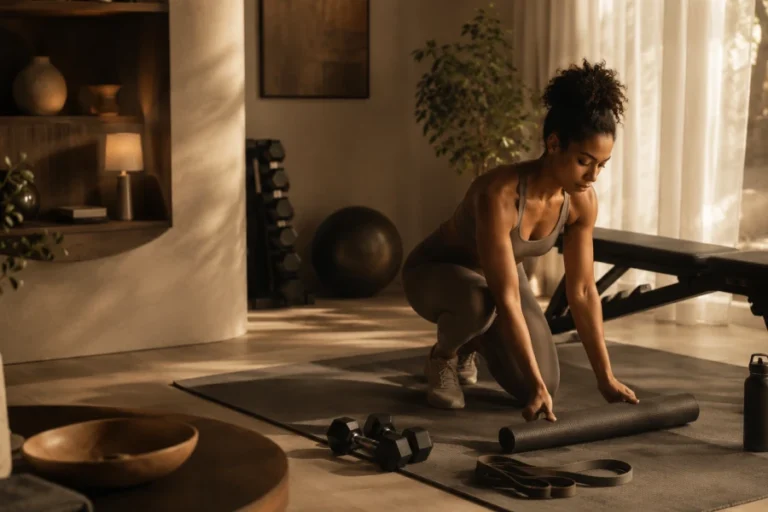
Motivation often starts before you begin the workout. A prepared mat, a basket of bands, or a clean water bottle can act as an invitation. These small visual cues reduce the hesitation that can build after a long day. Keep your favorite equipment visible but not messy. A few thoughtful details can make the area feel like part of your home instead of a temporary corner. Add a lamp, plant, or calming wall color if the space needs warmth. Use a small shelf for items you reach for often. Try beginner workout corner ideas that make starting feel less intimidating. The room should encourage action, not demand perfection. Your environment can gently remind you that a short session still counts.
Storage is what keeps a multifunctional room from feeling overwhelmed. Choose containers that hide small pieces while keeping them easy to access. A closed cabinet can work well for bands, sliders, towels, and recovery tools. A sturdy basket can hold mats or foam rollers without looking too technical. Use wall hooks for lightweight gear that would otherwise end up on the floor. Keep only the equipment you use often within immediate reach. Seasonal or occasional items can go into a separate closet. A clear storage plan lets you shift quickly from exercise to everyday living. This flexibility matters in apartments and shared spaces. The more easily the room resets, the more useful it becomes.
Your first layout does not need to be permanent. Use the space for a few weeks, then notice what feels inconvenient. Maybe you need more room for stretching or easier access to weights. Perhaps your storage is too far away from the active zone. Adjust one small detail at a time instead of rebuilding everything. Your routine will tell you what the room needs. The best workout spaces evolve through use, not perfectionism. Keep what supports momentum and remove what creates friction. Over time, the area will feel increasingly personal and efficient. A small space can become powerful when it is designed around your real life. Consistent movement matters much more than an elaborate setup.


Leave a comment